



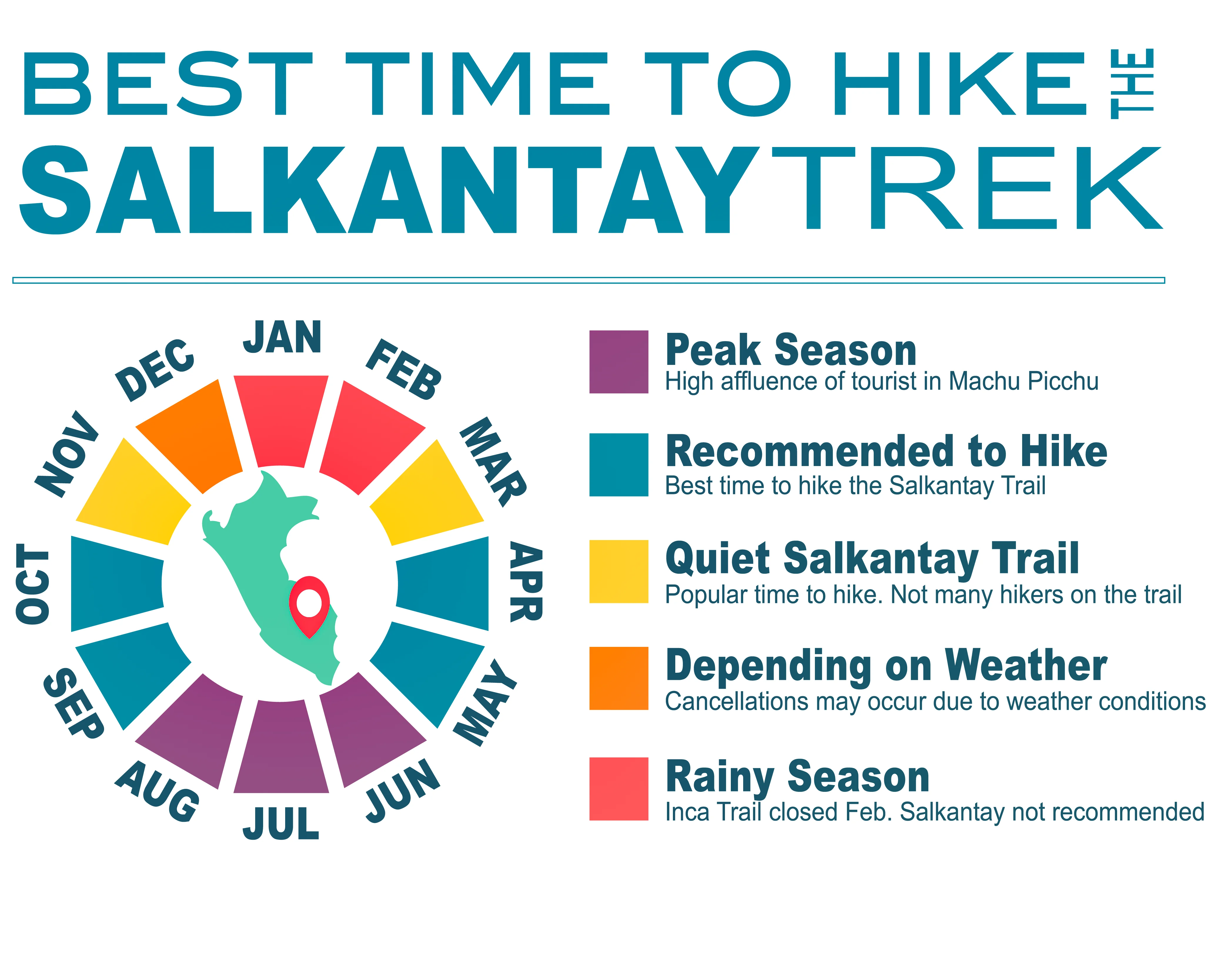
The best time to hike the Salkantay Trek to Machu Picchu in Peru is during the dry season, from April to November. This period coincides with the North American and European summer and the Andean winter in Cusco, offering clearer skies, stable weather, and safer trail conditions.
Although Machu Picchu is open year-round, the most recommended months for the Salkantay Trek are April, May, June, September, and October. During these months, hikers enjoy less rainfall, better mountain views of the Andes, and ideal trekking temperatures.
The dry season (April - November) provides sunny days and cold nights, making it the most popular time for trekking to Machu Picchu. In contrast, the rainy season (December–March) brings heavier rainfall, muddy trails, and reduced visibility, though landscapes are greener and crowds are smaller.
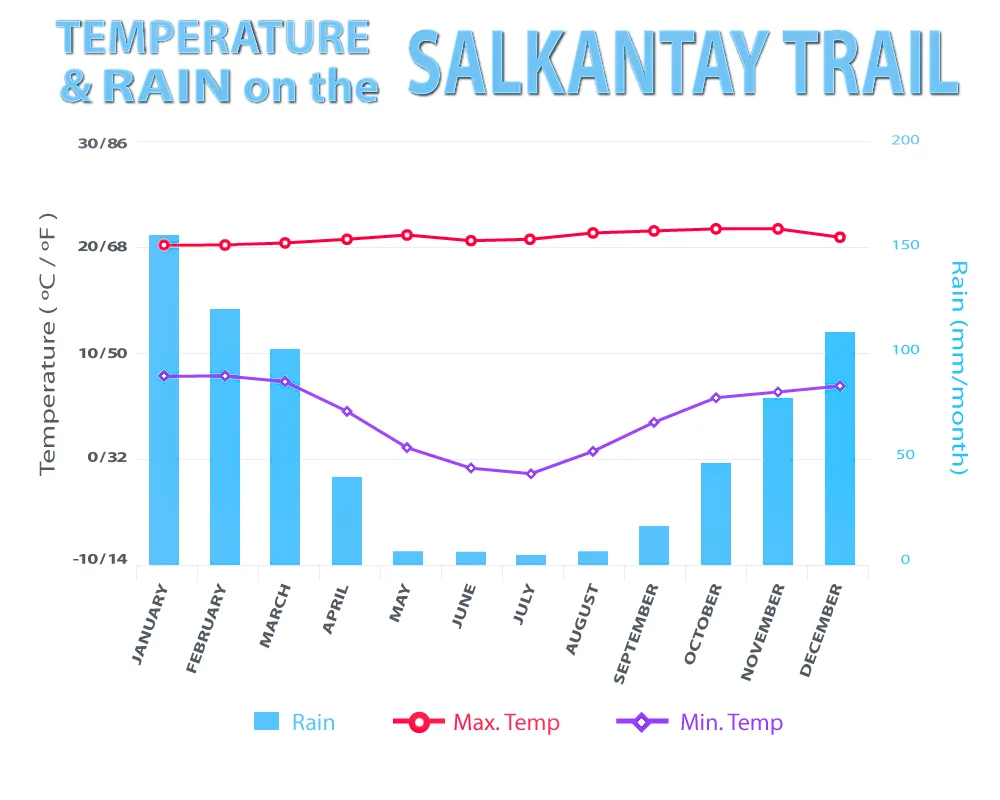
For those who want to avoid the crowds and don't mind heavy rains, opt for the months of November, December or March, but be aware that the Andes mountain range can experience inclement weather in the rainy season. We advise avoiding January and February.
July and August are high season and have a large number of visitors, which means an influx of hikers on the Salkantay trail.
Remember to keep in mind Peru's Inti Raymi in June, as many pilgrims try to align their travels with the Inca celebration of this week.
¿Am I out of shape for a trek to Machu Picchu? is a common question you may be asking yourself.
If you love the outdoors, nothing can stop you from having the hiking adventure of a lifetime, regardless of your fitness level. But remember to give yourself time to prepare-at least three weeks before the trip will make it more enjoyable.
Try these 5 fitness tips for hiking Salkantay and have the confidence to perform well on the trail.
1.- Focus on your cardiovascular fitness and leg strength.
Participate in aerobic activities such as swimming, biking, brisk walking or jogging. Add a short period of more strenuous exertion to your routine.Lunges, squats, lunges, leg and calf raises, lunges and even planks are excellent bodyweight exercises that require no special equipment or skill.
2.- Get a strong back and core.
Put on your backpack with some water bottles and practice step ups. This will prepare your back for the weight you'll be carrying during the hike.Push ups, sit ups, bridges and planks are some of the best exercises to develop a strong back and core.
3.- Stop eating those extra calories.
Choosing healthier foods and beverages can make you look and feel better, as well as make a big difference in your health.Eat more fruit, eat lots of vegetables, limit your carbs, drink plenty of water and you're sure to get in shape for your hike.
4.- Try local hikes.
Find places with variable terrain and go for a walk two or three times during the week. Let your body know that you'll take it beyond your daily routine.Be sure to wear the same shoes you will wear on your hike. Improving your balance can prevent injury.
5.- Mental preparation is important, try yoga and meditation.
You'll notice a big difference in how you feel before your hike if you incorporate a consistent yoga routine.Combat fear by visualizing success and understanding why you are undertaking an adventurous journey and knowing that you will have the best support available.

Commitment to quality, we have ISO 9001, ensuring excellence in our services.

With ISO 14001 we prioritize environmental sustainability, reducing our impact on the planet.

We are an official agency and tour operator, ensuring a unique and high quality travel experience.

Traveler's Choice Award in 2023, a testament to our dedication to exceptional travel experiences.