Have you ever wondered what travelers eat while trekking one of the world’s most famous trails? The Inca Trail is not only a physical challenge but also a journey of unexpected flavors that few tourists experience. Each campsite holds culinary secrets designed to keep you energized, surprise your palate, and accompany you every step of the way to Machu Picchu.
In this blog, you’ll discover everything from breakfasts that energize you to snacks that fuel long hikes. You’ll also find hot dishes that few imagine cooks can make right on the trail. Get ready to explore the food on the Inca Trail like never before and learn the secrets that make this experience more than just hiking: a true culinary adventure!
What to expect from the food on the Inca Trail?
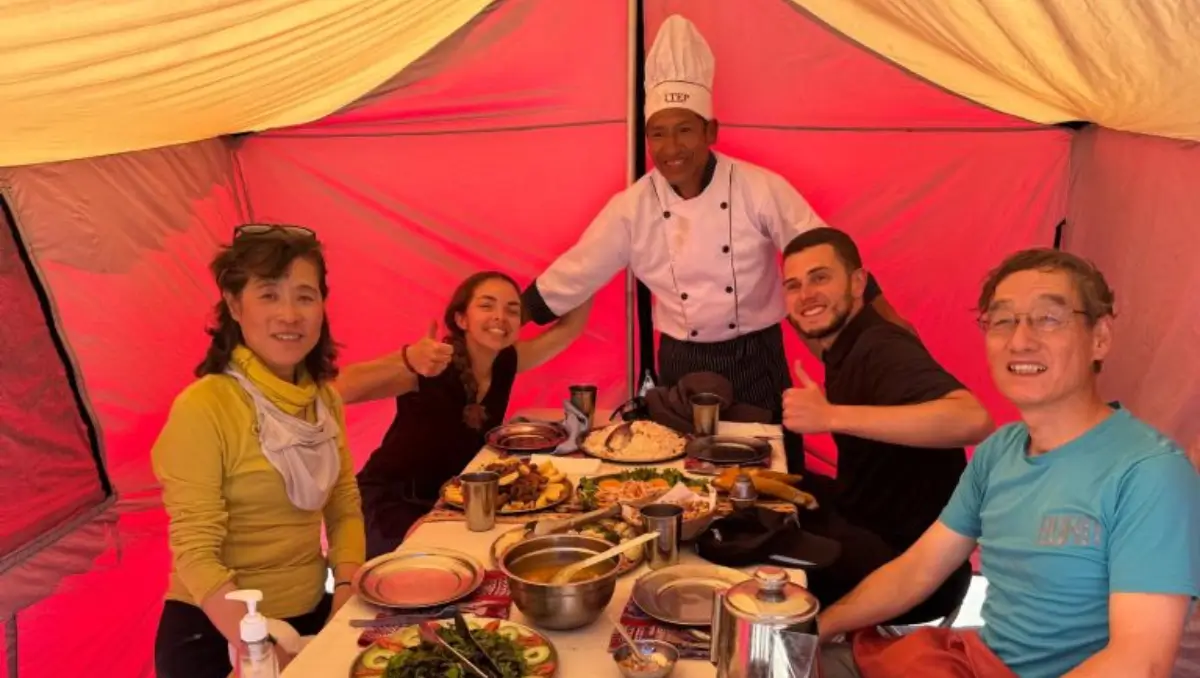
Along the Inca Trail, our cooks carefully plan every meal to ensure travelers have enough energy to face each day. At each campsite, guides and cooks prepare the meals, ensuring they are nutritious and easy to digest. Our team designs the logistics so that all food arrives fresh and ready for each group of hikers. This prevents any complications during the trek.
Travelers can expect three main meals a day: breakfast, lunch, and dinner, in addition to snacks provided during longer treks, similar to those enjoyed on a Humantay Lake tour . Menus typically include carbohydrate- and protein-rich foods to maintain strength and stamina. Our cooks specifically design each meal to energize hikers, helping them enjoy the trek without losing vitality. Guides strategically distribute snacks, such as nuts, cookies, or chocolate, to replenish energy between campsites.
Typical breakfasts
Breakfast is essential on the Inca Trail, as it provides the energy needed to start each day with the necessary strength for several hours of hiking, especially before demanding activities like a Rainbow Mountain tour . Menus typically include hot porridge, eggs prepared in various ways, fresh local fruit, bread, and herbal teas such as muña or chamomile.
A nutritious breakfast helps keep the body active and reduces fatigue during the ups and downs of the trail. It’s also an ideal time to hydrate and pack your backpack before setting off for the next stage, ensuring that every hiker starts the day with energy and a positive attitude.
Lunches on the road
During the Inca Trail trek, our cooks usually serve lunches at the campsites, presenting them as a picnic or buffet depending on the group’s arrangements. Our team designs these lunches to replenish the hikers’ energy and maintain their performance.
Menus typically include hot soups, rice, potatoes, quinoa , fresh vegetables, and a protein source such as chicken or fish. Bread and fruit options are also available . If any traveler has dietary restrictions, it is advisable to inform the agency or guides in advance, who will prepare suitable alternatives, ensuring everyone can enjoy a nutritious and safe lunch.
Dinners on the Inca Trail
At the end of each day, the cooks on the Inca Trail prepare hot and energizing dinners, essential for regaining strength and staying hydrated, just like on demanding routes such as the Salkantay. Trek . Dinners usually include stews with vegetables and proteins, comforting hot soups, pasta and, as a special touch, coca tea, ideal to help digestion and counteract the effects of altitude.
Replenishing fluids and eating a balanced meal at night is key to facing the next day with energy. These dinners not only nourish but also offer a moment of rest and socialization among hikers, allowing the body and mind to prepare for the next stage of the Inca Trail.
Snacks and takeaway food
During the Inca Trail, snacks are essential to maintain energy between camps, especially on longer stages or challenging routes like Choquequirao. Trekking . Hikers often carry nuts, energy bars, chocolate, and cookies—foods that are easy to carry, quick to consume, and provide carbohydrates and proteins to replenish energy immediately.
These small snacks help prevent fatigue and maintain a steady energy level, allowing each hiker to continue the trail without feeling too tired before reaching the next campsite. Carrying the right snacks is a simple yet highly effective strategy for enjoying the hike without interruption.
Typical drinks
Staying hydrated on the Inca Trail is just as important as nutrition, as it is on other adventures in the region, such as tours in Manu . Typical drinks include coca tea and other local infusions, which help counteract the effects of altitude and improve digestion. We also recommend drinking water constantly throughout the day. Always carry enough in your backpack or refill at designated points along the trail.
Staying properly hydrated allows the body to perform better during hikes, prevents headaches, and reduces fatigue, ensuring a safer and more enjoyable day. Local herbal teas, in addition to their health benefits, offer hikers a moment of rest and comfort.
Frequently Asked Questions
Is it possible to experience authentic regional flavors during the hike?
Yes, campsites often offer dishes that include local ingredients and traditional recipes adapted to maintain hikers’ energy, allowing them to enjoy typical flavors without compromising nutrition.
What foods help prevent altitude sickness during the Inca Trail?
Infusions like coca tea, fresh fruits, carbohydrate-rich foods, and constant fluid intake help minimize the effects of altitude sickness and keep the body active during the trek.
Are local and fresh ingredients used at the camps?
Yes, the cooks strive to use fresh and local products whenever possible, ensuring nutritious and good quality meals throughout the trek.
How spicy is the food on the Inca Trail?
Our cooks generally prepare the food with a moderate level of spice so as not to affect the hikers. They can also adjust the seasonings according to the group’s preference.
Do cooks serve any typical desserts along the route?
Yes, our cooks include simple desserts like fresh fruit, cookies, chocolates, and sometimes traditional desserts adapted for the hike.
Does the food adapt to the season in which the hike takes place?
Yes, the menus may vary slightly depending on the availability of fresh produce each season, but our cooks always maintain a proper nutritional balance.
Are there options for people with food allergies?
Yes, by informing the agency or guide beforehand, the cooks can prepare alternatives for those with allergies or special dietary needs.
Is it possible to learn about the preparation of dishes from the cooks?
Some groups have the opportunity to observe and learn about the preparation of certain dishes, allowing for a closer experience with the local cuisine.
Is it necessary to bring energy supplements or is the camp food sufficient?
The food prepared at camps is usually enough to maintain energy, although some travelers choose to bring additional supplements or snacks depending on their personal needs.
What is the most popular dish among hikers during their trek, based on past experiences?
Dishes like stews with vegetables and protein, hot soups, and simple desserts are usually the most popular among hikers due to their flavor and energy content.