

Exploring the Inca Trail goes beyond breathtaking landscapes and ancient ruins. It’s also an adventure for your taste buds. Food plays a key role in your energy and stamina. What you eat on the Inca Trail can make or break your trek.. Knowing what to eat can make the difference between an exhausting day and one filled with vitality. What do hikers eat at the campsites? How do they keep their energy up on the most demanding sections? Keep reading to find out.
Curious about food on the Inca Trail? This blog covers it all. From energizing breakfasts to the snacks that keep you going on the hardest climbs. We’ll also give you practical tips on what to pack and what to leave behind to avoid carrying unnecessary weight. Get ready to learn the secrets of Inca Trail nutrition. These tips will help you enjoy every step of this unique adventure.
The importance of food on the Inca Trail
During the Inca Trail trek, nutrition plays a fundamental role in how you feel and your physical performance. Every step requires energy. What you eat on the Inca Trail can make the difference between enjoying the trek and feeling exhausted. Eating properly helps maintain energy levels, improve stamina, and recover better after long days of hiking. This is especially true for those who combine the Inca Trail with the Salkantay Trek. Trekkers notice how good nutrition makes it easier to cope with altitude and physical exertion.
In addition, food can be an ally in preventing altitude sickness. Consuming carbohydrate-rich foods and avoiding heavy or fatty meals helps your body adapt more easily to the altitude. Inca Trail camps take meal logistics seriously. Every hiker receives balanced and nutritious food throughout the trek. Think breakfast, dinner, and energizing snacks between hikes.
Types of meals offered
Breakfast: sets the tone for your day on the trail. Expect a hearty meal with oatmeal, eggs, whole-wheat bread, fresh fruit, and tea or coffee. These foods provide the necessary carbohydrates and protein to tackle the first few hours of hiking. Additionally, on routes that include the Humantay Lagoon Tour , a balanced breakfast helps prepare you for challenging ascents.
Lunch: keeps you going through the afternoon. Guides serve generous portions of rice, pasta, potatoes, quinoa, chicken, or fish. It’s combined with fresh vegetables and soups, providing enough energy to continue the journey without feeling fatigued. Tours that include a Rainbow Mountain hike require even more energy, so lunches are designed to replenish your strength before the hikes.
Dinner: In the evening, meals are lighter to aid digestion and ensure a good night’s sleep. They usually include soups, mild stews, rice, and cooked vegetables, avoiding heavy or fatty foods.
Snacks and light meals: Between walks, snacks are essential for maintaining energy levels. Nuts, energy bars, fruit, and cookies are common choices that allow you to quickly and naturally regain strength. Even on longer adventures like a Choquequirao During a trek , snacks become essential to maintain constant energy.
Food in the camps
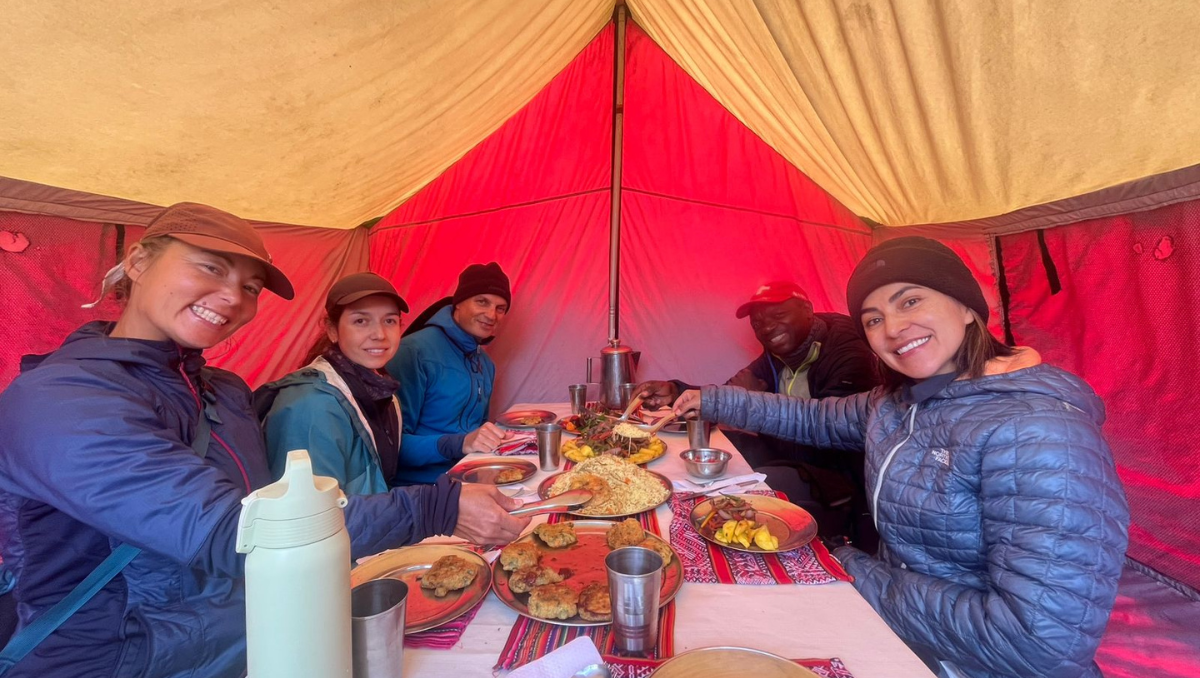
At the Inca Trail camps, meals are prepared with care and following strict hygiene standards. A dedicated team of cooks handles all the food preparation. They use portable stoves to deliver nutritious and safe meals every day.
Food variety is key on the Inca Trail. Each day brings a balance of carbohydrates, proteins, and vegetables. This keeps hikers fueled from start to finish. Better yet, cooks tailor meals to different dietary needs vegetarian, vegan, and gluten-free options are all available. This same attention to detail is applied to tours in Manu , where food logistics are essential for sustaining long days of exploration.
What to bring yourself
Although campsites offer full meals, carrying some snacks in your backpack can be very useful. Recommended options include nuts, energy bars, chocolate, dried fruit, and whole-grain crackers, which are easy to carry and provide a quick energy boost during hikes.
On the other hand, there are some items you shouldn’t bring: ultra-processed food , alcoholic beverages, makeup, casual clothing, or formal shoes. These items not only take up space but can also complicate your experience and affect your comfort.
Some tips for preserving food during the trek include storing it in airtight bags, avoiding direct sunlight, and consuming it during the day to prevent spoilage. This way, you’ll have a safe and steady energy supply without any problems during the Inca Trail.
Tips for good nutrition during hiking
Maintaining a healthy diet during the Inca Trail is key to enjoying the experience without feeling fatigued or unwell. One of the most important aspects is staying hydrated : drinking water constantly helps prevent altitude sickness and improves your physical performance.
It’s also advisable to eat small, frequent meals instead of large ones, as this aids digestion and keeps energy levels stable during the hike. Before climbing hills or tackling more demanding sections, it’s best to avoid heavy meals , opting instead for light snacks such as nuts, energy bars, or fruit.
Finally, you should adjust your diet according to the altitude and climate : at higher altitudes, your body needs more carbohydrates and easily digestible foods; on cold days, it can be helpful to include soups or hot drinks to maintain warmth and energy. These small adjustments make all the difference in making your Inca Trail experience more comfortable and enjoyable, whether you’re on a tour to Machu Picchu or on combined routes like the Salkantay Trek. trek .
Frequently asked questions about food on the Inca Trail
Is it possible to experience local flavors during the trek?
Yes, campsites often offer dishes with traditional ingredients, such as quinoa, potatoes, corn, and local herbs, allowing you to enjoy authentic regional flavors.
What foods help prevent altitude sickness?
Complex carbohydrates such as rice, oats, whole-wheat bread, and quinoa help maintain energy and facilitate adaptation to the altitude. Consuming fresh fruits and vegetables is also beneficial.
Are fresh, local ingredients used at the camps?
Yes, the cooks prepare meals with fresh, local ingredients whenever possible, ensuring nutrition and flavor throughout the trek.
Is the food spicy?
Generally, the food is not very spicy, adapting to international palates and the need to avoid irritating the stomach during the hike.
Are there any typical desserts?
Yes, some camps offer simple desserts such as fresh fruit, jellies, or small local sweets to complement the main meals.
Does the food adapt to the season?
Yes, the food selection varies according to the season to take advantage of fresh, quality products, maintaining nutrition and variety in every meal.
Are there vegetarian or vegan options?
Yes, camps usually offer vegetarian and vegan options, but always notify the guide or agency in advance to ensure your dietary needs are met.
Can I bring my own food?
Yes, it is recommended to bring some snacks or personal food, such as nuts, energy bars or fruit, especially for long stretches between meals.
How much water is recommended per day?
It is recommended to drink at least 2 to 3 liters of water per day, adjusting according to the intensity of the hike and the altitude to stay hydrated and prevent altitude sickness.
What snacks are most practical for the road?
The most practical are nuts, energy bars, dried fruit, and whole-grain crackers, as they are easy to carry, nutritious, and quickly absorbed.