
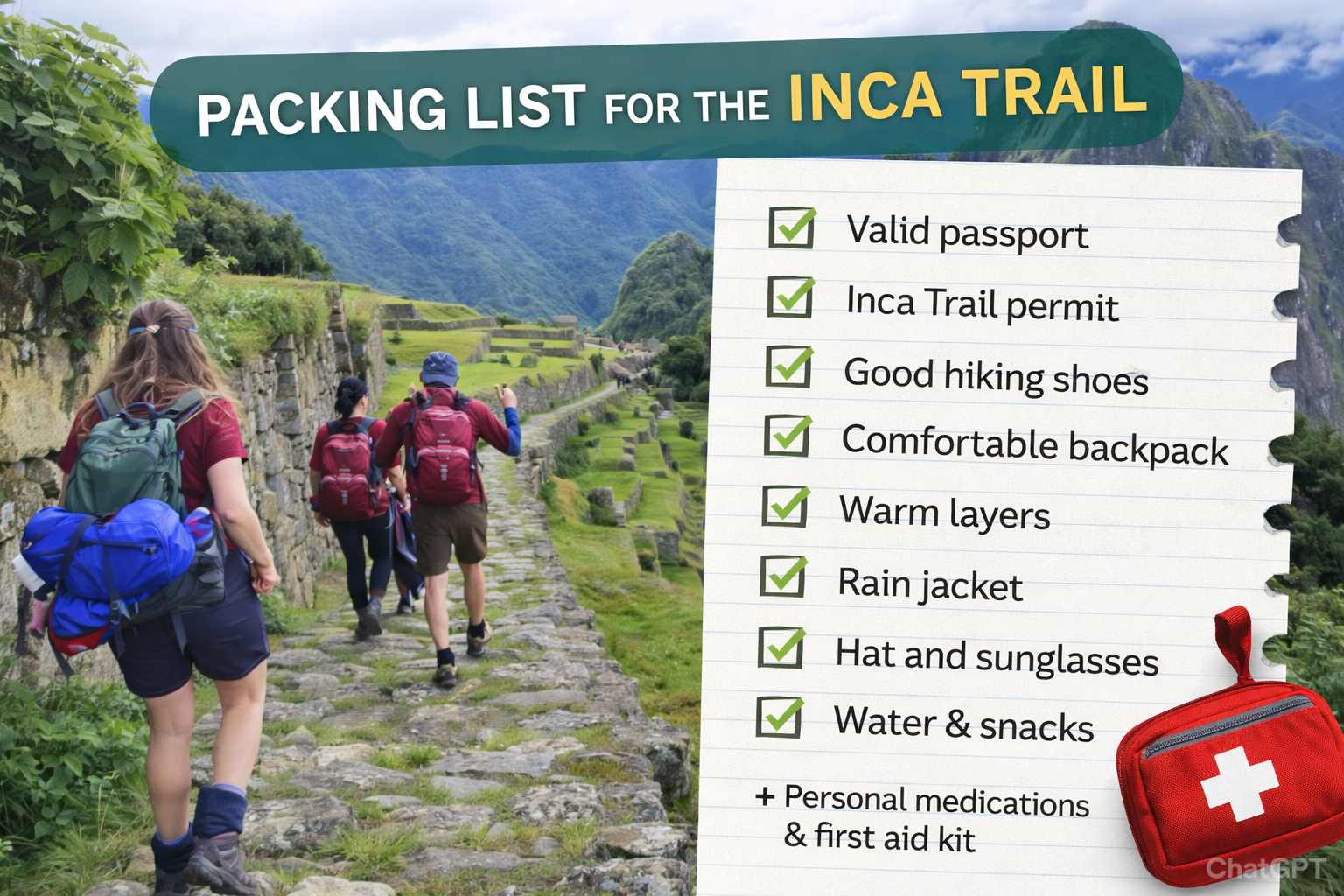
Have you ever wondered if you’re truly prepared for the Inca Trail? It’s not just about physical endurance or reaching Machu Picchu, but about having the right gear to ensure every step of the adventure is safe and comfortable. Imagine hiking along ancient trails and realizing you’ve forgotten something essential… what would you do?
In this blog, you’ll discover everything you need to pack , from the essentials to the details few travelers consider, to ensure your experience is unforgettable and hassle-free. Get ready to check your backpack and make sure you’ve got everything you need before embarking on this incredible hike.
Documents and essential items
Before starting your Inca Trail adventure , making sure you have all the necessary documents and items is key to avoiding problems. The most important items include:
- Passport and copies: Essential for identification and checks on the road. Carrying at least one physical copy can save you in case of loss.
- Inca Trail entrance tickets: These are mandatory and must be presented at the trailhead. Please verify the entry date and time.
- Travel or health insurance card: In any emergency, having insurance is vital. Keep the contact information handy.
- Cash and credit cards: Although most services are paid for in advance, it is always advisable to carry some cash in local currency.
Tip : Keep all your documents in a safe and easily accessible place, such as a fanny pack or neck bag. This will allow you to have them on hand without worrying about losing them.
Appropriate clothing for the Inca Trail
Choosing the right clothing can make all the difference to your experience, as the weather changes rapidly throughout the trip; this is just as important if your travel package includes Humantay Lagoon . The recommendation is to dress in layers:
- Lightweight and breathable layers: T-shirts, pants and thermal clothing that allow mobility and absorb moisture.
- Waterproof and windproof jacket: Essential to protect yourself from rain and wind.
- Trekking socks and comfortable underwear: Prevent chafing and keep your feet dry.
- Avoid streetwear or inappropriate footwear: Street shoes or non-technical clothing can ruin your walk.
Tip : “Layering your clothing is your best ally against changing weather.” This allows you to easily adapt to warm temperatures during the day and cold temperatures in the morning or evening.
Footwear and accessories
The right footwear and accessories not only provide comfort, but also prevent injuries and make the hike more enjoyable, especially if you add the Rainbow Mountain tour to your travel package .
- Comfortable, broken-in hiking boots : Avoid wearing brand-new boots on the Inca Trail. Footwear that’s already molded to your feet reduces the risk of blisters.
- Lightweight camping sandals (optional): Useful for resting your feet when you arrive at camp, but not for walking.
- Hat, cap and sunglasses: They protect from the sun in open areas and from intense radiation at high altitudes.
- Trekking poles : They help reduce fatigue, improve balance and decrease the impact on knees and joints, especially on descents.
Tip : Adjust your poles properly before starting and walk at a steady pace; your knees will thank you.
Luggage and backpacks
Organizing your luggage correctly is essential for hiking light and having everything at hand, even if you’re doing other trekking routes like Salkantay. Trekking . Consider the following:
- Daypack (20-30 L): Here you will carry what you need for the daily hike: water, snacks, extra clothes and documents.
- Travel backpack: If your tour includes luggage transport, use a larger backpack for the rest of your belongings.
- Waterproof bags: They protect clothes, documents, and electronic devices from rain or moisture.
Tip : Avoid carrying too much weight. Ideally, your daypack shouldn’t exceed 10-12% of your body weight for comfortable walking.
Health and personal care
Taking care of your health during the Inca Trail is essential for enjoying the experience without problems. Some essential elements include:
- Sunscreen and insect repellent: Exposure to the sun and insects is constant; protect your skin and avoid discomfort.
- Basic first aid kit: Pain relievers, plasters, bandages and any personal medication you may need.
- Altitude sickness pills and preventative tips: Altitude sickness can affect your performance and well-being. Consult your guide and consider measures such as resting, hydrating, and chewing coca leaves if permitted.
- Personal hygiene: Toothbrush and toothpaste, wet wipes and tissues are essential for maintaining cleanliness in camps.
Tip : Keep your first aid kit accessible and check that all medications are within their expiration date.
Food and snacks
Maintaining your energy is key to completing your daily hike; this also applies if you’re taking tours in Manu . Pack your backpack with easy-to-eat and nutritious food:
- Energy bars, nuts and chocolates: They are light, easy to carry and provide quick energy.
- Water and hydration system : Stay well hydrated; a filter bottle or hydration pack makes it easy to drink while hiking.
- Food available on the route or at campsites: Some tours include meals, and at certain points you can get additional fruit, cookies, or snacks.
Tip : Avoid bringing perishable foods and prioritize foods that won’t get squashed or spoiled.
Technology and entertainment
Although the Inca Trail is an experience in nature, bringing some devices and entertainment items can make your trip more comfortable and memorable:
- Camera or phone with a good camera: To capture landscapes, special moments and travel memories.
- Power Bank or extra batteries: Electrical power may be limited; make sure you can charge your devices when you need them.
- Books, music or travel journal: Ideal for relaxing at night, reflecting on the hike or planning the next day.
Tip : Protect your devices with water-resistant cases and store cables and batteries in separate compartments so you don’t lose anything.
Practical packing tips
Knowing how to pack well will help you travel light and have everything you need on hand during your trip:
- Weight distribution: Place the heaviest items closest to your back and in the center of the backpack to maintain balance and comfort.
- Daypack vs. camp backpack: Carry only the essentials for the day hike in your daypack (water, snacks, extra clothes, documents), and leave the rest in your camp backpack if your tour offers transportation.
- Avoid unnecessary items: Casual clothes, makeup, or formal shoes only take up space and weight; focus on what is practical and useful for the walk.
Tip : Before you leave, try carrying your backpack and adjust the straps; this will help you avoid back and shoulder pain during your hike.
Frequently Asked Questions
Can I carry my backpack the entire trek, or are there transport services?
Most tours allow some of your luggage to be transported by mules or vehicles to the camp, but you will always need to carry a light backpack with the essentials for the day’s hike.
Is it necessary to bring extra money for emergencies along the way?
Yes, although many things are included in the tour, it’s advisable to bring some cash in case of unforeseen events or if you want to buy additional snacks.
Can I use borrowed trekking poles on the trail?
Some tours offer poles to borrow, but ideally you should use your own, already adjusted to your height and walking style.
How strict are the baggage checks at the entrances to the Inca Trail?
The checks are rigorous: they make sure you’re not bringing in fresh food, prohibited items, or excess baggage. Plan what you’ll take in advance.
Are there places where I can recharge my phone or camera during the hike?
Access to electricity is limited along the trail. Only a few campsites offer charging stations, usually at an additional cost. Bring power banks . Bank is essential.
Are large water bottles allowed, or only small ones?
It is recommended to carry a comfortably sized water bottle or portable hydration system (such as a CamelBak ); large bottles can be uncomfortable for long walks.
Can I bring snacks specific to my country or can I only buy them along the way?
You can bring your own snacks as long as they are light and non-perishable; this ensures you have enough energy between meals.
Is it advisable to bring some evening entertainment to the campsite?
Yes, a book, travel journal, or light music can help you relax and unwind after a hike.
Are there weight restrictions for daypacks or tour luggage?
Yes, daypacks generally shouldn’t exceed 10-12% of your body weight, while tour luggage usually has limits specified by the agency.
What should I do if I need special medication while on the Inca Trail?
Always carry your medication in your daypack and inform your guide. Keep medications in their original packaging with the dosages clearly indicated.